
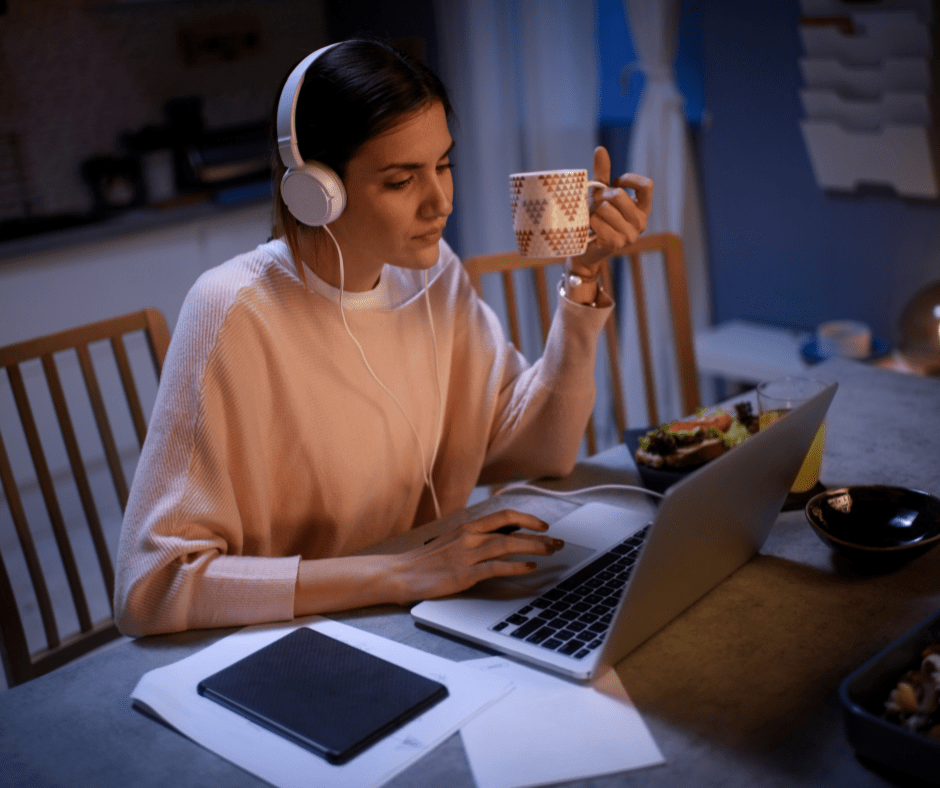
Prior to the pandemic of 2020, working from home was not particularly rare, but it was an exception to the norm. Let’s see what the numbers say, using some data from GitLab: The 2020 Remote Work Report 2020 – this report doesn’t measure if people are autistic, but with one in 100 people being autistic, we were certainly included in there.
By the start of 2020, 4.1% of the working population worked from home. This figure rose to approximately 47% by April 2020 due in no small part to the pandemic. Between government policy and the loss of work productivity if staff were off sick with COVID-19, working from home now made more sense.
The advantage of working from home, pandemic aside, based on a number of studies and research, was flexible scheduling, according to 50% of respondents. Many autistic people find being able to set their own schedule helpful as it means not having to fit into neurotypical norms about when working hours ‘should’ be and the opportunity for breaks whenever needed. However, 15% find they have distractions at home, and 12% struggle to stay motivated when not in the office – if you have ADHD, distraction management is vital, and if your home is full of things more stimulating than work…focusing could get hard.
Ella, our Head of PR said: “Working from home for me compliments my flexible working hours. I do another PR job as well as my work for Autistic Nottingham, so not having to come physically into the office for a certain time helps with that.
“It also means I can take small comfort breaks from work whenever I need it without feeling judged – no one from either of my workplaces minds if I watch anime or play video games, so long as I get my job done efficiently and effectively and don’t clock it as working hours. But not having anyone observing me makes taking those breaks easier.”
The second main benefit to working from home is a lack of commute, according to 43% of respondents. Autistic people who don’t drive may find public transport overwhelming due to sensory issues. The lack of commute could arguably reduce stress for some. However, 27% struggle to unplug at the end of the day, meaning the lack of separation in physical space between work and home could cause more stress.
Phil, our Head of Training and Development, said: “For me, it saved me £55.00 a week in bus fares. Overall, it made my day more relaxed. However, long term, I began to lose motivation, and when we were asked to start going in to work, I opted to have 2 days in and 3 at home. It gave me focus and balance: some social isolation and some social interaction, which worked for me.”
Another benefit is reduced anxiety/stress, according to 32% of respondents. This, again, certainly includes autistic people who may not enjoy an office environment where they are expected to socialise. However, 16% report having difficulties with collaboration and communication, and another 16% experience loneliness when working from home – after all, every autistic person is different.
Ella, our Head of PR said: “I do find myself getting lonely sometimes. I can message colleagues to chat casually, but we are supposed to be working and not just tossing each other funny memes about working! In an office, it’s easier to both chat causally and work.”
Overall, some autistic individuals find working from home a perfect accommodation, but this doesn’t mean it works for everyone. It should be an automatic accommodation where appropriate, but only if the autistic employee would find an advantage to it.
Source for statistics, GitLab: The 2020 Remote Work Report 2020
 Autistic Nottingham